

Who Really Belongs on Your Priority Team?

By Doug Diamond | Business Improvement
When your leadership team identifies a quarterly priority, who gets assigned to work on it?
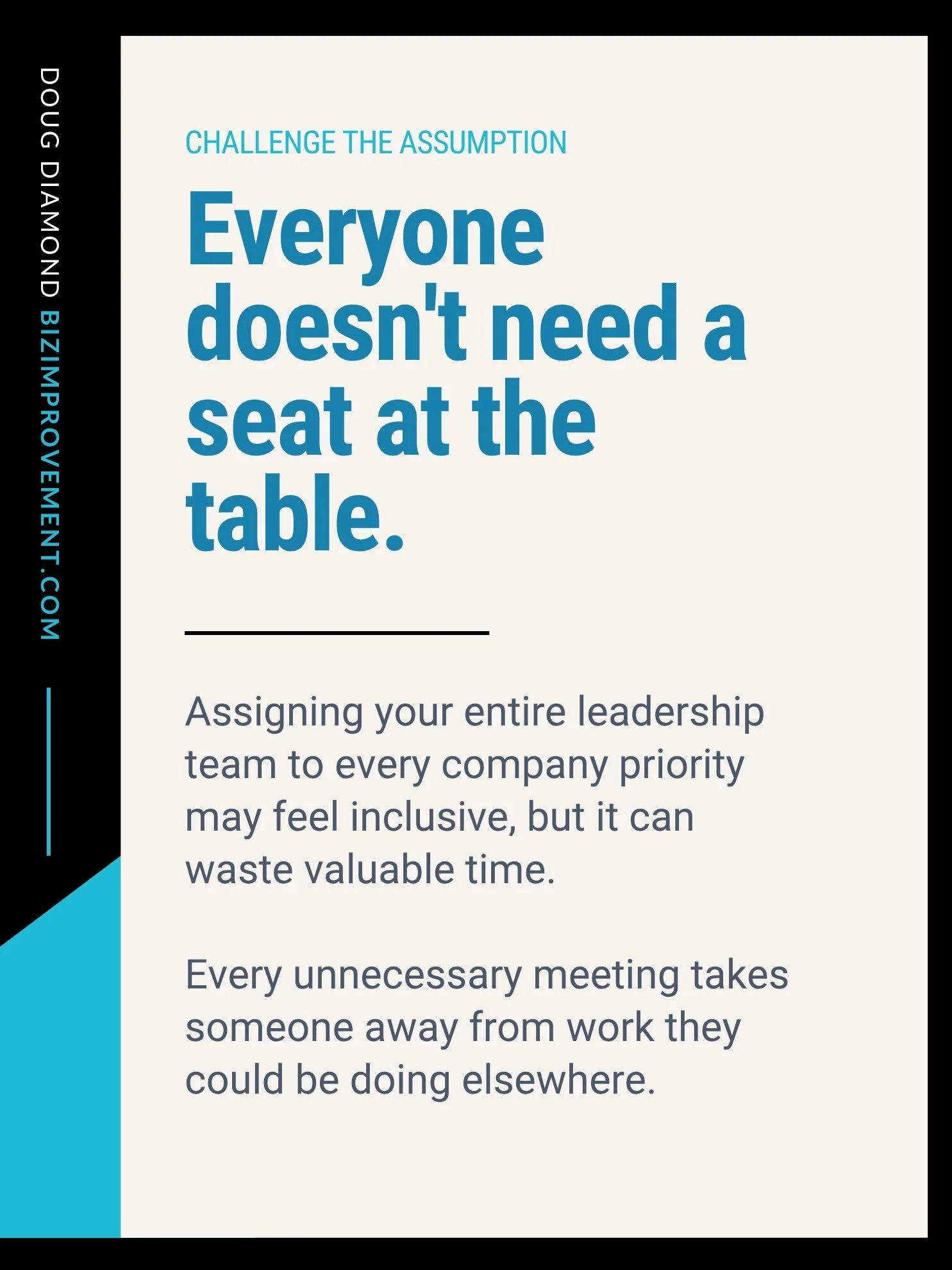
In a lot of companies, the answer is the entire leadership team.
I understand why that happens. Everyone wants to be involved, and the priorities are important to the business. It seems reasonable to have all the leaders participate.
But I've found that putting more people on a priority doesn't necessarily lead to better results.
In fact, sometimes it does just the opposite.
The goal isn't to get everyone involved. The goal is to get the right people involved.
Not Every Priority Needs the Entire Leadership Team
Think about the priorities on your quarterly plan.
Some may involve improving your sales process. Others might focus on service delivery, employee development, or operational efficiency.
Does every member of your leadership team really need to participate in every one of those improvements?
Probably not.
When too many people are involved, meetings become harder to schedule. Discussions take longer. And you can end up spending a lot of time keeping everyone informed rather than actually making progress.
I'm not suggesting that leaders shouldn't understand what's happening across the business.
They absolutely should.
But there's a difference between being informed about a priority and being responsible for getting it done.
That's an important distinction.
Choose the Team Based on the Priority
When I'm working with leadership teams on quarterly planning, I encourage them to think carefully about who should be involved in each improvement.
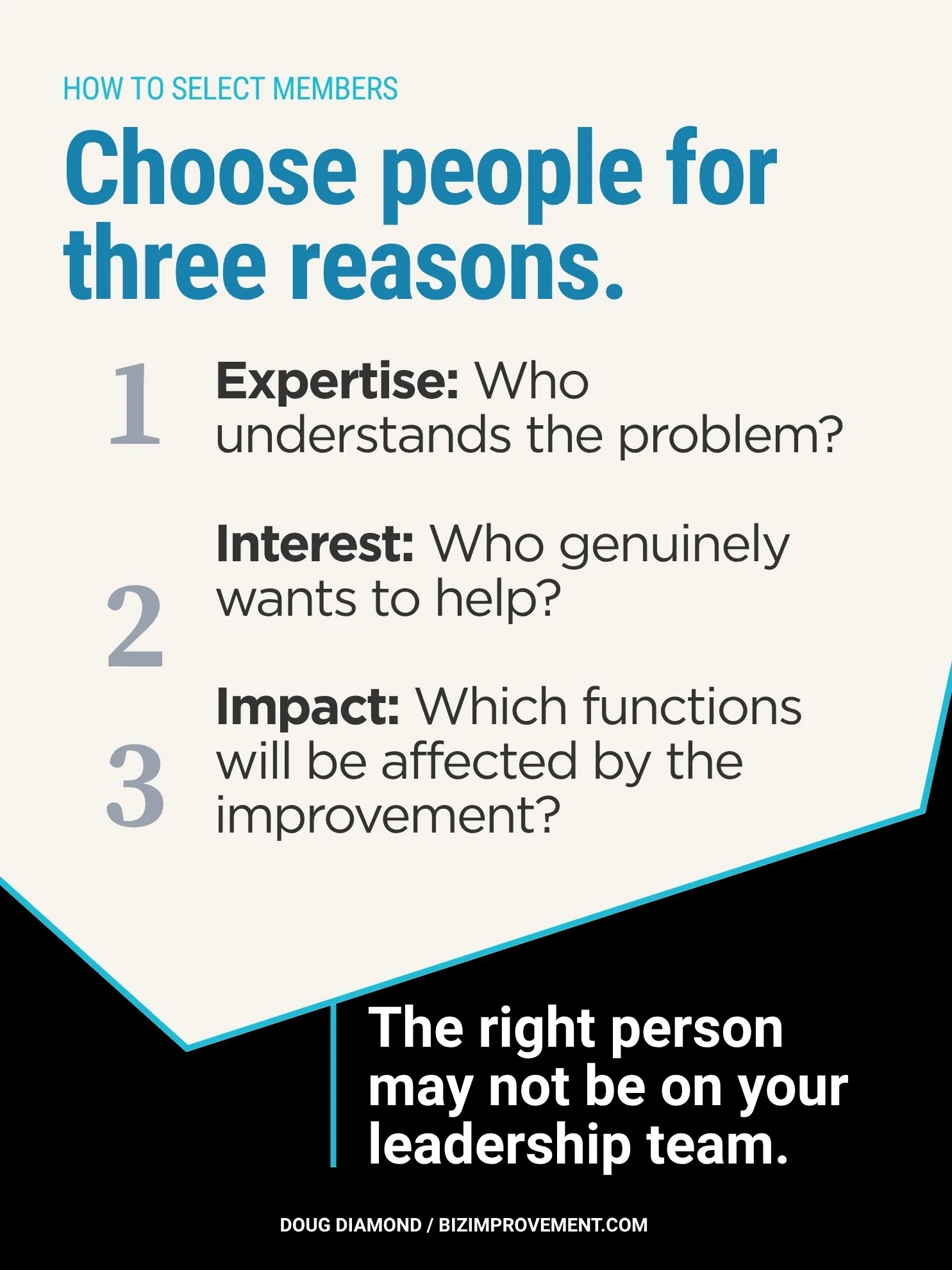
There are three things I would consider.
1. Expertise
Who understands the problem we're trying to solve?
If the priority involves improving service delivery, you'll probably want someone who understands the service operation and the challenges the team is experiencing.
If it involves sales, you need people who understand the sales process.
This seems obvious, but sometimes we assign priorities based on someone's title rather than their knowledge.
And the person with the most relevant expertise may not be on the leadership team.
2. Interest
Who is genuinely interested in working on this improvement?
I think this matters more than people sometimes realize.
When someone is interested in a problem and wants to help solve it, they're more likely to put the energy into moving it forward.
That doesn't mean every priority has to be someone's favorite project.
But when you have the opportunity to involve someone who has both the knowledge and the interest, that's a pretty good combination.
3. Impact
Which parts of the business will be affected by the improvement?
If you're changing a process that involves both sales and service delivery, you probably need representation from both functions.
Otherwise, you risk developing a solution that works well for one department but creates problems for another.
You want the people who understand the implications of the changes you're making.
Expertise, interest, and impact. Those are three good places to start when deciding who's on the team.
Smaller Teams Can Make Better Progress
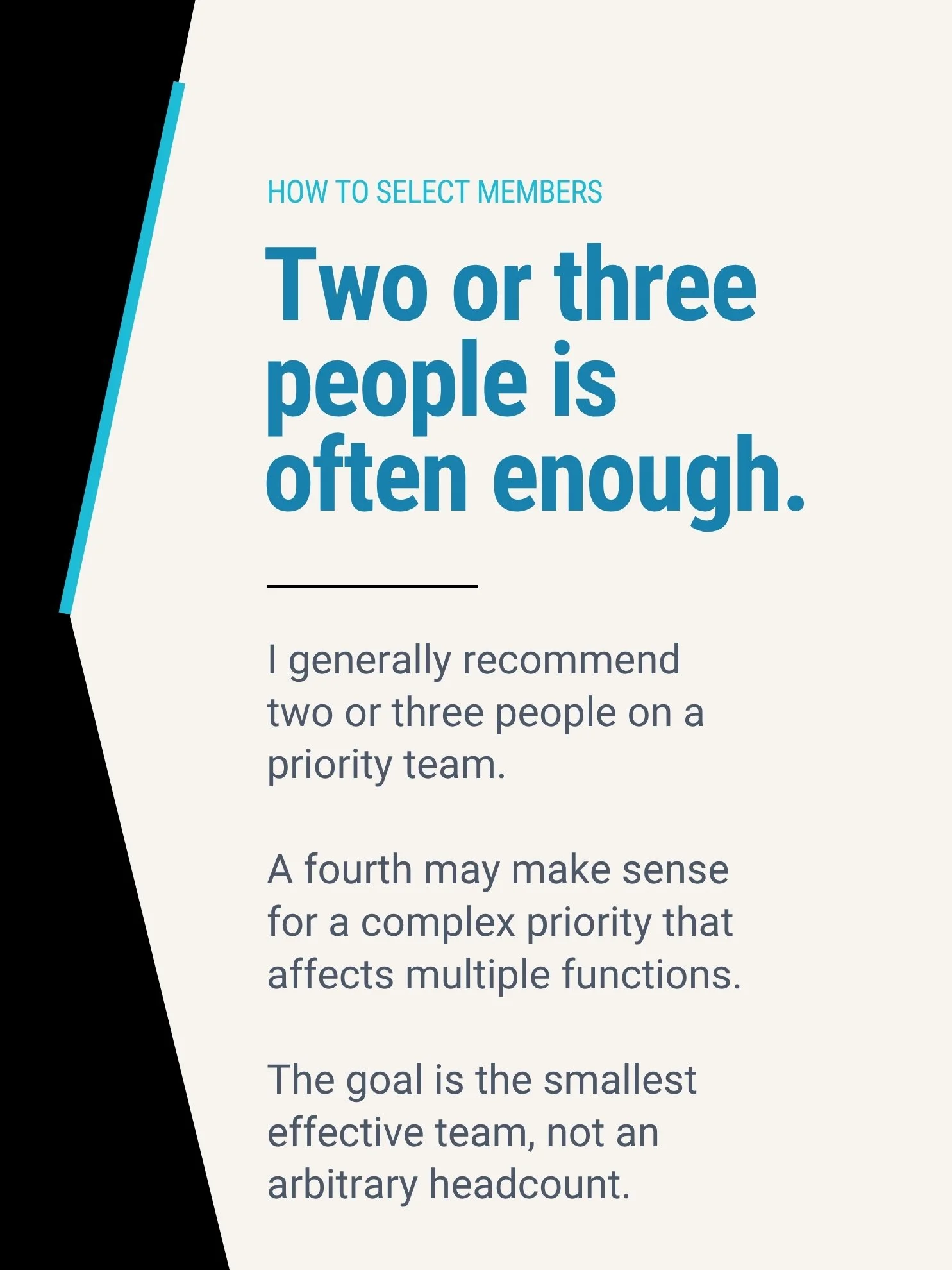
In many cases, I think two or three people are enough to work on a quarterly priority.
Sometimes you need a fourth person, particularly when the improvement affects several parts of the business.
But I would start with the smallest team that has the knowledge and ability to get the work done.
Why?
Because smaller teams are generally easier to coordinate.
It's easier to schedule time together, make decisions, divide up responsibilities, and maintain momentum.
Of course, the size of the team should reflect the complexity of the priority. I'm not suggesting that every improvement can be accomplished by two people.
I'm suggesting that we should be deliberate about who participates instead of automatically including everyone.
One Person Needs to Drive the Priority
There's another important part of this conversation.
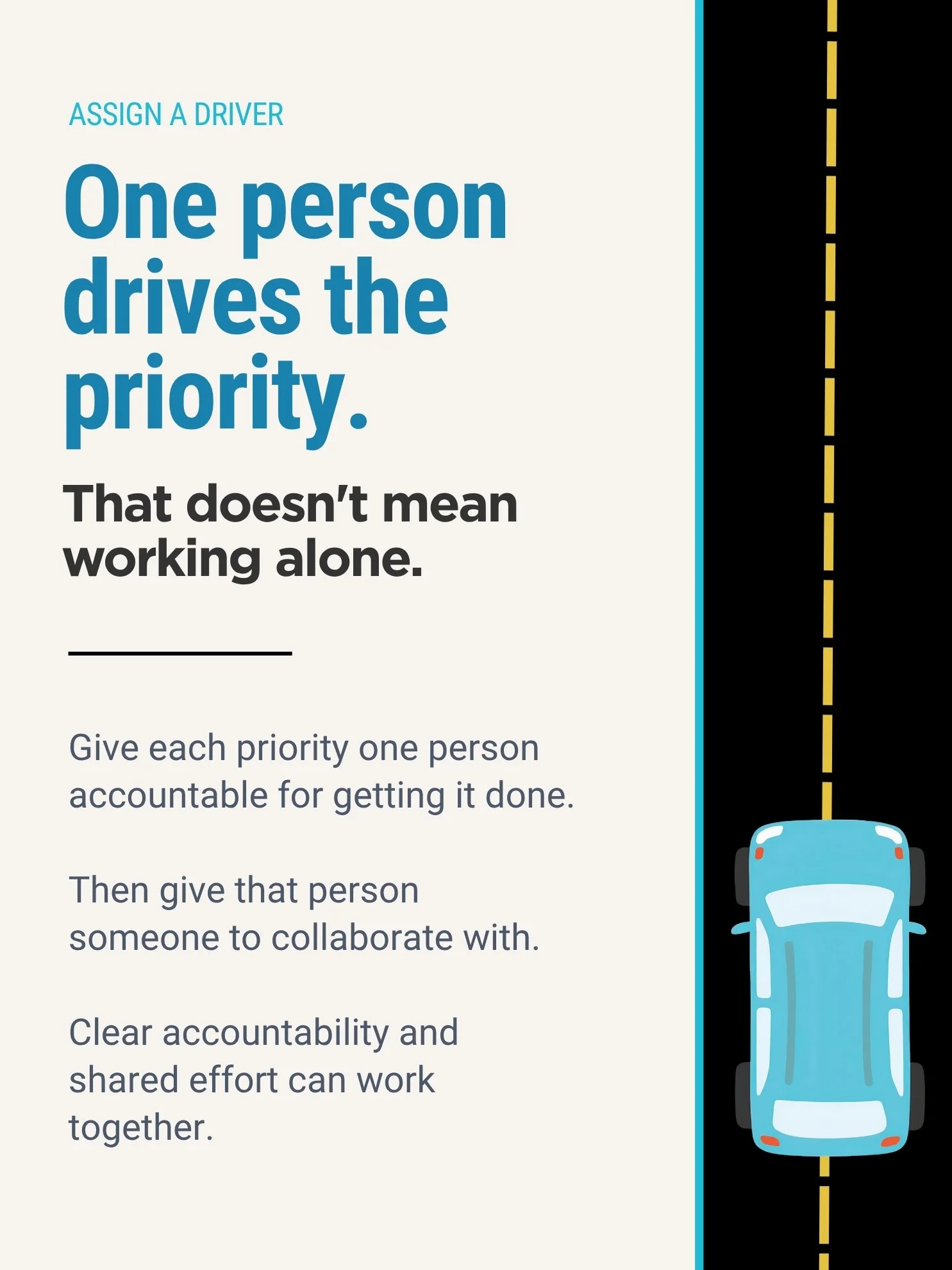
Even when several people are working on a priority, one person needs to be accountable for driving it forward.
That doesn't mean they're expected to do all the work themselves.
They may need help from other leaders, managers, or employees with specialized knowledge.
But someone needs to take responsibility for keeping the work moving.
That person should understand what needs to be accomplished, coordinate the people involved, and make sure obstacles are addressed.
Without that clarity, it's too easy for everyone to assume that someone else is taking care of it.
And that's when priorities start slipping.
The Right People May Be Outside Your Leadership Team
One mistake I see is assuming that because quarterly priorities are developed by the leadership team, only members of that team should work on them.
I don't think that's always the best approach.
There are often people elsewhere in the organization who have valuable expertise or a strong interest in a particular improvement.
Involving them can make the team more effective.
It can also create opportunities for those employees to contribute to improvements beyond their regular responsibilities.
The leadership team still needs to establish direction and maintain accountability.
But that doesn't mean the leadership team has to do all the work.
In fact, if your leaders are personally involved in every improvement, I'd encourage you to think about whether that's the best use of their time.
It's Not Too Late to Make Adjustments
If you've already assigned your quarterly priorities, you don't have to wait until the next planning session to reconsider who's working on them.
Take a look at each priority.
Is the right person driving it?
Does the team have the expertise needed to accomplish the work?
Are the people involved interested and engaged?
Are all the affected functions represented?
And are there people participating who don't really need to be involved?
If the team isn't structured effectively, make an adjustment.
There's nothing wrong with recognizing that a different combination of people would be more effective.
The point is to improve your chances of accomplishing the priority.
A Question for Your Next Leadership Meeting
Here's something I'd encourage every CEO to do.
Review your current quarterly priorities and look at the people assigned to each one.
Don't just ask whether someone is accountable.
Ask whether you've assembled the right team to get the work done.
You may discover that some teams are too large, others are missing important expertise, and a few priorities would benefit from involving someone outside the leadership team.
Making those adjustments now can help you make better progress during the remainder of the quarter.
Because when it comes to accomplishing quarterly priorities, more people doesn't necessarily mean more progress.
The right people, working together with clear accountability, make the difference.
Build a Better Plan for the Coming Year
As you prepare for annual planning, think beyond the improvements you want to make.
Think about who will be responsible for making them happen.
Our FREE Annual Planning sessions are designed to help you get started with a more focused approach to planning and execution.
