

Is 60% Actually a Good Quarter?



By Doug Diamond | Business Improvement
If your leadership team accomplishes 60% of its quarterly priorities, would you consider that a successful quarter?
Most CEOs would probably say no.
They see the 40% that didn't get done. They start thinking about what went wrong, why their team fell short, and what they need to do differently next quarter.
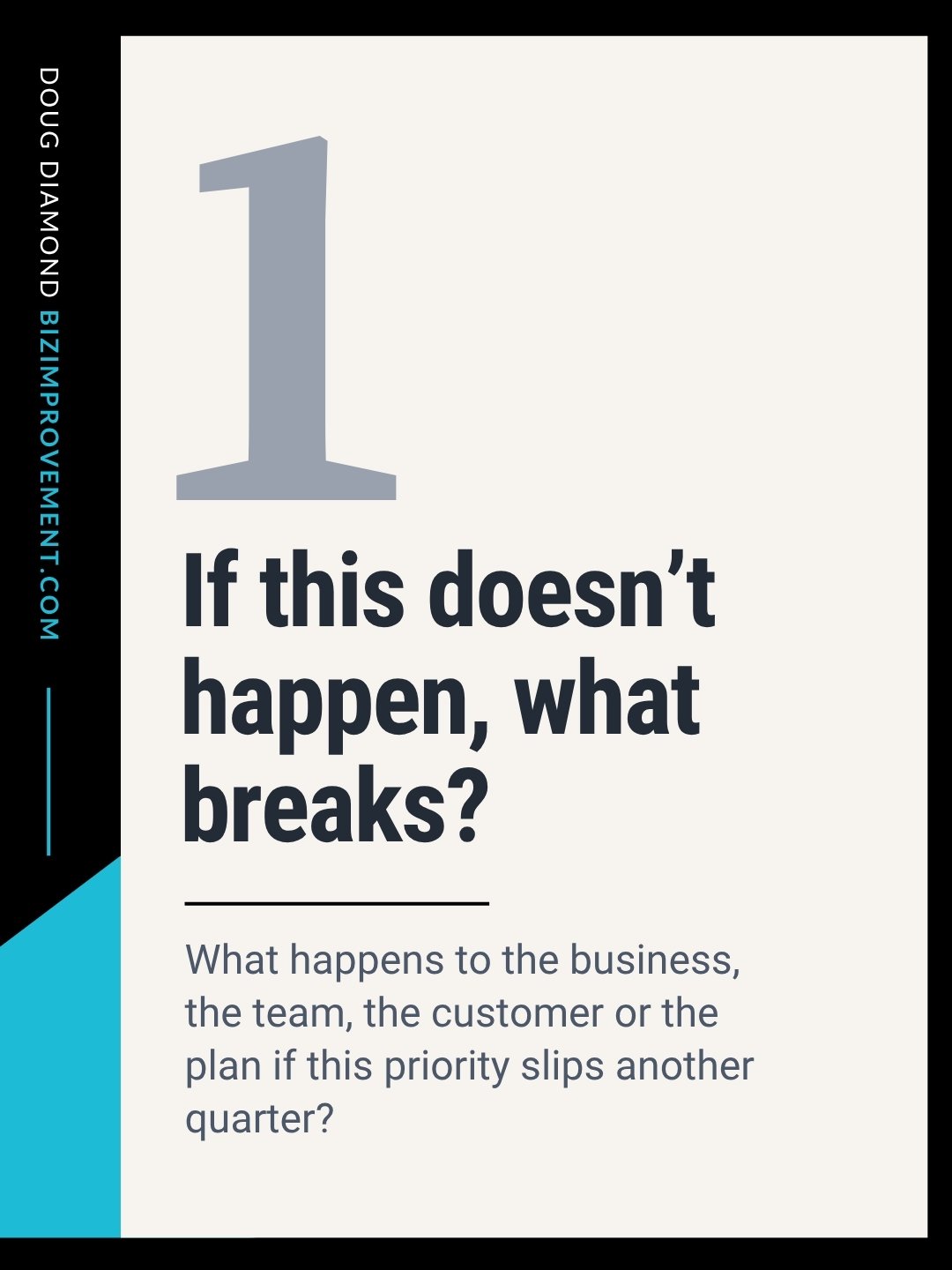
But here's something that surprises many of the CEOs I work with: Completing 60% of your quarterly priorities can actually represent a pretty good quarter.
The more important question is, which 60%?
Not All Priorities Are Created Equal
In my work with CEOs and leadership teams, I often see companies develop quarterly plans with more priorities than they can realistically accomplish.
The intentions are good. Everyone wants to make improvements. Each department has things it wants to accomplish, and the leadership team wants to make progress on all of them.
But then the quarter begins.
Clients need attention. Employees have questions. Problems arise. The everyday demands of running the business compete with the time needed to work on strategic improvements.
By the end of the quarter, some priorities are complete, others are partially finished, and a few haven't moved at all.
The natural response is to push harder next quarter.
But trying harder isn't always the answer. Choosing better priorities is.
What If You Knew You Could Only Accomplish 60%?
Here's an exercise worth trying with your leadership team.
Look at your quarterly priorities and ask everyone to imagine that the team can only accomplish 60% of what's on the list.
Which priorities would they choose?
Which improvements would make the greatest difference to the business?
And which ones could wait?
This changes the conversation.
Instead of treating every priority as equally important, the team has to discuss the relative value of each improvement.
You may discover that people have very different ideas about what matters most.
That's an important conversation to have before the quarter begins, not after it's over.
Focus Is a Leadership Decision
A quarterly plan should not simply be a collection of everything your leadership team would like to accomplish.
It should reflect a deliberate decision about the improvements that will have the greatest impact.
That requires discipline.
It means acknowledging that some good ideas will have to wait. It means being realistic about the time your leadership team has available. And it means making sure everyone understands what matters most.
The CEO plays an important role here.
Listen to your leadership team. Understand their perspectives. Discuss the tradeoffs.
Then make the decisions necessary to establish a clear direction.
When everyone understands the priorities and agrees to support them, the team is in a much better position to execute.
Measure the Improvements, Not Just the Checkmarks
Imagine two companies finishing the quarter.
Company A completes nine out of ten priorities, but most are relatively minor improvements.
Company B completes six out of ten, including the changes that address its biggest operational challenges.
Which company had the better quarter?
I would want to know more about the impact of the work before answering.
Completing priorities matters. Accountability matters. But the ultimate goal isn't to achieve a perfect completion percentage.
The goal is to make meaningful improvements that move the business forward.
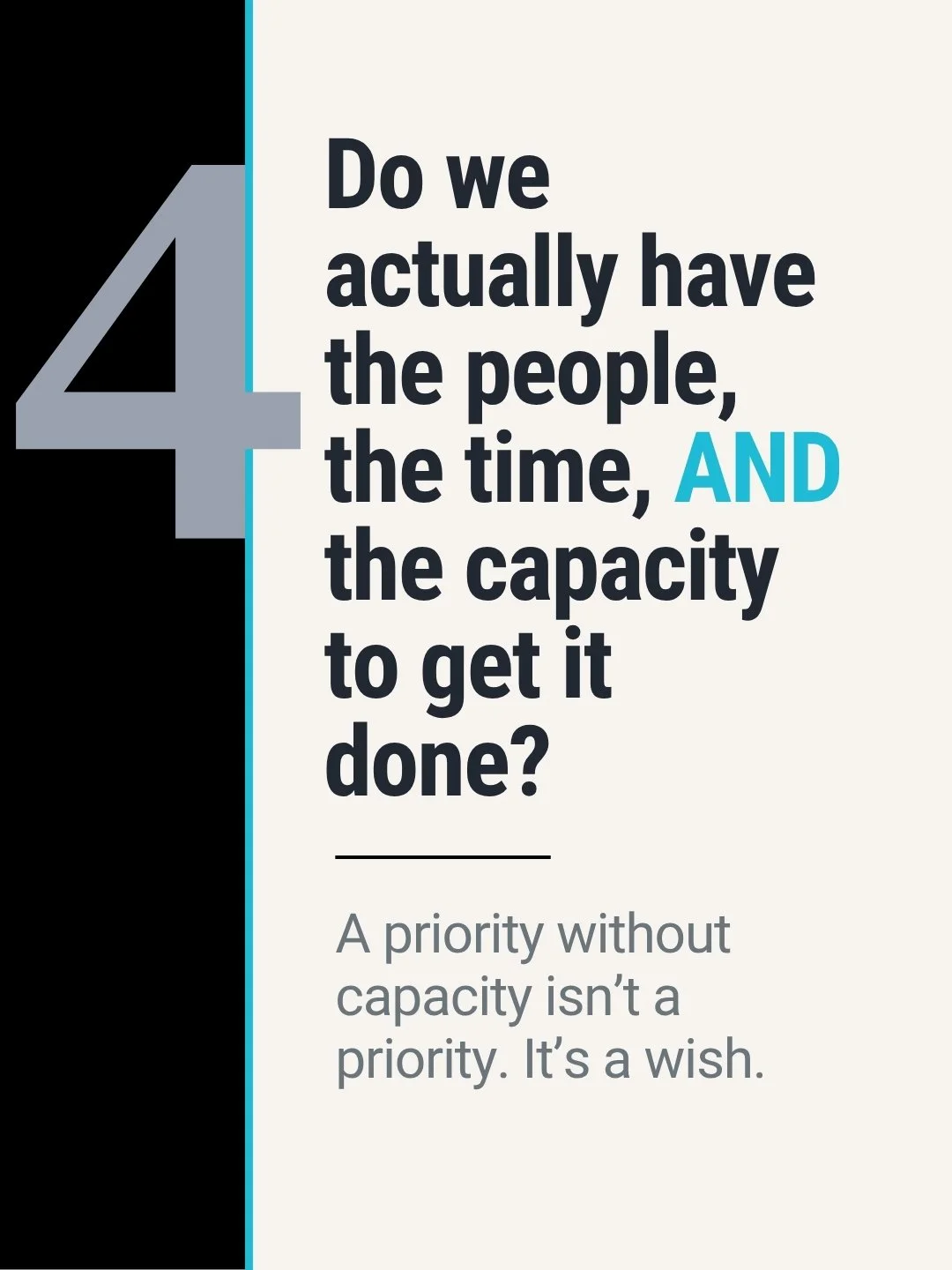
Of course, that doesn't mean we should be satisfied with repeatedly missing commitments. Once we've identified the priorities that matter most, we need to organize our teams and resources to get them done.
The distinction is between accepting mediocre execution and deliberately focusing our efforts where they will make the greatest difference.
One Thing to Do Before Your Next Leadership Meeting
Take another look at your quarterly plan.
Ask yourself:
Are we working on the few improvements that will make the greatest difference?
Have we included priorities that are less important simply because someone wants them done?
Does everyone on the leadership team understand which priorities are nonnegotiable?
If we could only accomplish 60%, would we be happy with the priorities we selected?
If the answers raise concerns, make some adjustments.
You don't have to wait until next quarter to improve your focus.
And as you prepare for annual planning, remember that a great plan isn't necessarily the one with the most ambitious list of goals.
It's the one that helps your leadership team make the improvements that matter.
So don't just ask whether your team accomplished 60% of its priorities. Ask: Which 60%?
Ready to Put Together a Great Annual Plan?
Annual planning is an opportunity to get your leadership team aligned around the improvements that will make the greatest difference to your business.
Business Improvement offers FREE Annual Planning sessions to help you get started.
